


Good morning, and welcome to The Ship Show!
I’ve got some potentially exciting news for Georgia and Alabama football fans, who could probably use a stiff drink after last weekend.
The Supreme Court announced this week that it will reconsider a nearly 160-year-old federal law banning Americans from distilling hard liquor at home.
It’s comforting to know that despite everything going on in the country, our nation’s highest court has found time to address the constitutional rights of a guy named Dale who makes whiskey in his shed.
For a little drunk history, the federal government banned home distillation back in 1868, largely because people kept making whiskey without paying taxes.
Little known fact: the government wasn’t particularly fond of Americans enjoying untaxed recreational activities. Shocking, I know.
Since then, getting caught operating your own illegal distillery could land you a $10,000 fine and up to five years in prison. You can legally make your own beer and wine, but whiskey is where Uncle Sam draws the line.
Now, after two federal appeals courts reached conflicting conclusions about the ban, the Supreme Court will decide whether it’s constitutional.
A ruling is expected next summer, and even if the ban gets overturned, homemade liquor would still be subject to taxation and other regulations.
So by this time next year, you might be able to legally make your own moonshine to cope with another disappointing Saturday. Whether it’ll be safe to drink is an entirely different Supreme Court case.
But for now, there’s at least a little hope for aspiring moonshiners everywhere.
– Greyson Harris
In this week’s issue:

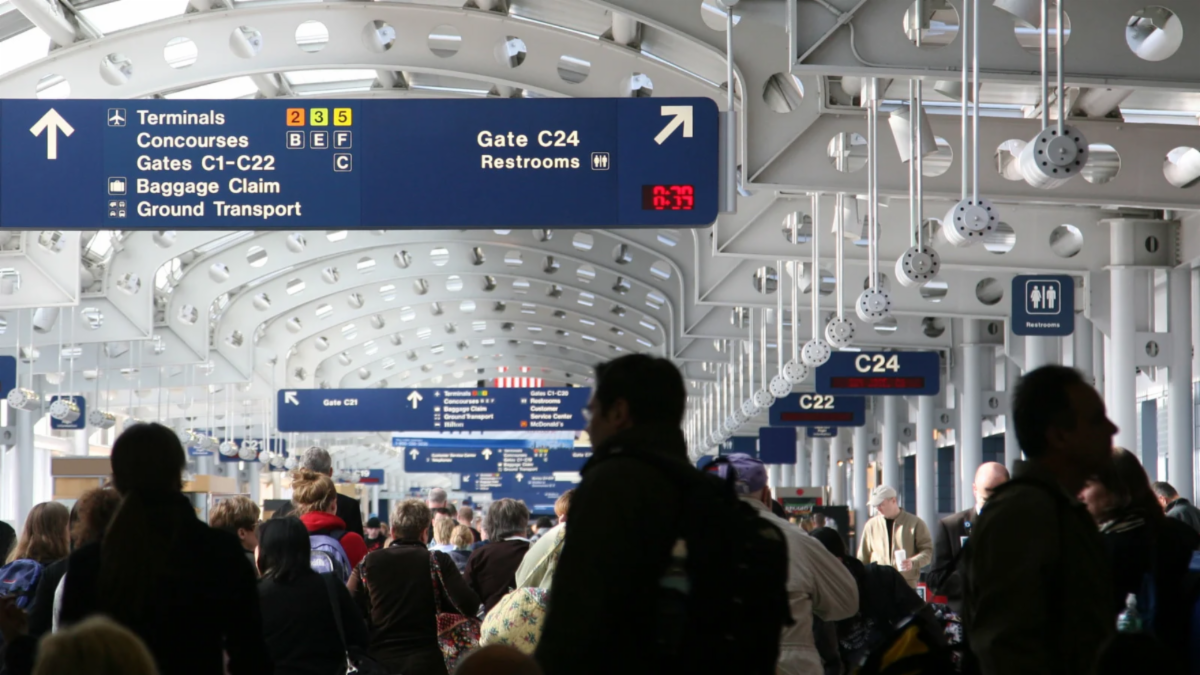
If you’re flying home for the holidays this year, you might want to let your family know that your presence is their present.
Because after paying for airfare, that’s about all you’re going to be able to afford.
According to Hopper’s 2026 Holiday Travel Index, Thanksgiving and Christmas flights are shaping up to be the most expensive in a decade, with domestic round-trip fares climbing considerably from last year.
Here’s what travelers are looking at:
For a family of four, that’s an extra $380 just to get everyone home for Thanksgiving. And that’s before you factor in baggage fees, airport parking, or the $14 sandwich you’ll reluctantly purchase during a layover.
The biggest culprit is the soaring cost of jet fuel, which has nearly doubled since the conflict with Iran escalated earlier this year.
The average monthly spot price has reached approximately $4.50 per gallon, a 91% increase from February. With disruptions to global oil supplies keeping energy prices elevated, airlines are spending billions more to keep their fleets in the air.
Across the industry, U.S. airlines spent $42.9 billion on fuel during the first eight months of 2026, an increase of $13.2 billion from the same period last year.
And those costs are starting to show up in earnings reports.
Delta Air Lines recently lowered its full-year earnings forecast by nearly 25%, projecting its annual fuel bill will increase by roughly $6 billion.
Despite the higher prices, airlines aren’t having much trouble filling seats.
Delta CEO Ed Bastian recently told analysts that customers have shown surprisingly little resistance to fare increases of roughly 20% this year.
Strong demand from higher-income travelers, business customers, and premium-cabin passengers has helped airlines maintain bookings even as ticket prices climb.
That’s good news for airline revenue, but considerably less exciting for anyone whose holiday travel budget doesn’t include a discretionary four-figure expense.
And with carriers considering slower capacity growth to offset higher operating costs, travelers may not see much relief anytime soon. Fewer available seats could give airlines even more room to keep fares elevated.
Act now or forever hold your bank account
Fortunately, there are still ways to avoid paying top dollar, provided your holiday schedule has some flexibility:
For Christmas travelers, leaving Monday or Tuesday before the holiday and avoiding a December 27 return could also help keep costs down.
Of course, none of this guarantees cheap airfare. But a little flexibility might at least leave you with enough money to buy someone an actual Christmas present.
Otherwise, there’s always the coupon book. Grandma would probably love a voucher for one free hug anyway.

Somewhere in Southern California, someone may be sitting on nearly a million dollars in Pokémon, sports, and other collectible trading cards.
Unfortunately, they won’t be doing a livestream where they rip the packs.
On October 13, a FedEx driver discovered that roughly $963,000 worth of trading cards had vanished from his truck outside a Professional Sports Authenticator (PSA) facility in Santa Ana, California.
That’s a lot of money for something most of us spent our childhoods keeping in a shoebox.
The driver reportedly noticed that the lock securing the truck’s rear cargo door was missing. Inside, two entire pallets containing approximately 100 packages each had disappeared, along with an unknown number of packages from a third pallet.
The initial loss estimate sits around $963,000, although investigators say that number could climb once a complete inventory is finished.
And while the driver discovered the missing cargo in PSA’s parking lot, police aren’t convinced that’s where the theft happened.
The lot is accessible to the public, and investigators are still working to reconstruct the truck’s movements. Some reports suggested the driver had been away from the vehicle for 60 to 90 minutes, but police haven’t confirmed that timeline.
So far, investigators haven’t identified any suspects, recovered the missing cards, or determined whether thieves specifically targeted the valuable collectibles.
The case also highlights a much larger problem for the freight industry.
Southern California remains one of the nation’s biggest cargo theft hotspots, and according to CargoNet, freight theft losses nationwide reached $304.6 million during the second quarter of 2026 alone.
FedEx says it’s cooperating with local law enforcement, while investigators continue trying to determine exactly when, where, and how the cards disappeared.
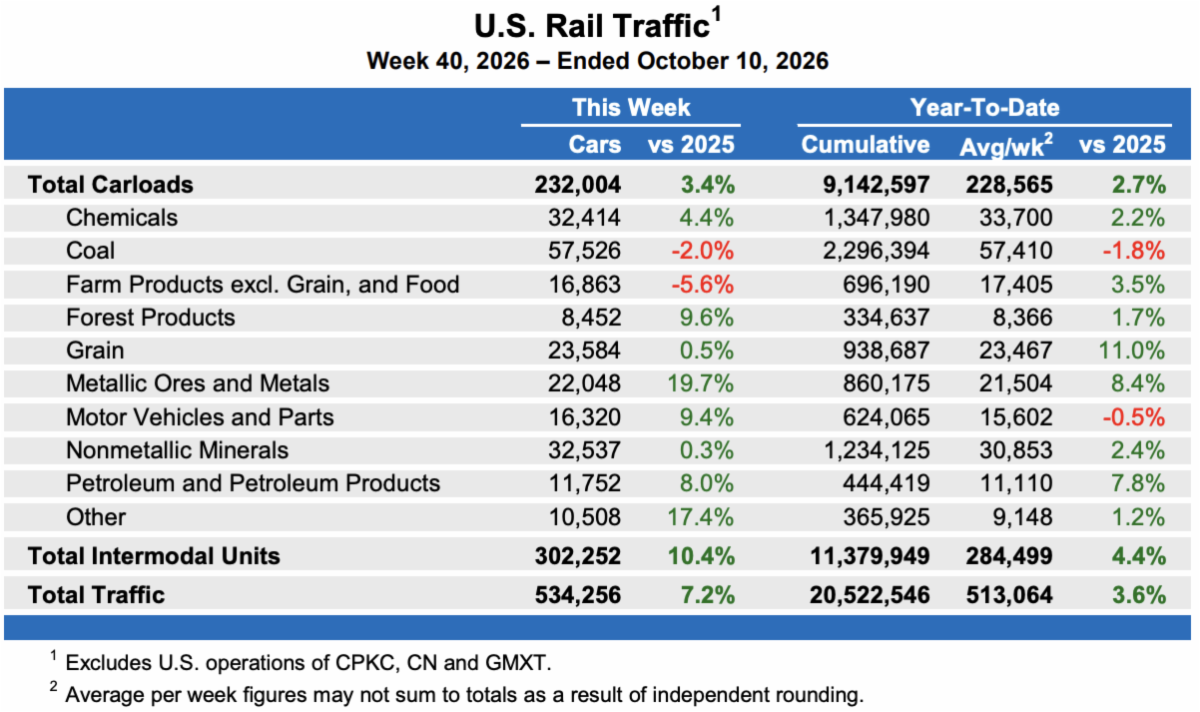
🚂 U.S. rail traffic gains momentum: U.S. railroads handled 534,256 carloads and intermodal units during the week ending October 10, up 7.2% year over year, according to the Association of American Railroads. Carload volume rose 3.4% to 232,004, while intermodal shipments jumped 10.4% to 302,252 units. Year-to-date combined traffic is up 3.6%, supported by high diesel prices and tightening trucking capacity.
🚢 Port of Long Beach sets new record: The Port of Long Beach handled 997,177 TEUs in September, up 25% year over year and marking its busiest month in 115 years. Loaded imports surged 31.3% to 509,390 TEUs, while exports rose 7.8% and empty container movements climbed 22.1%. Despite record volumes, the port reported no congestion, with year-to-date traffic up 3.9% amid high diesel costs and shifting trade conditions.
🚔 Truck safety crackdowns uncover hundreds of violations: Recent enforcement operations across Arizona, California, North Dakota, and Kentucky exposed widespread safety and compliance issues. Inspectors in North Dakota identified 494 violations, including 122 out-of-service violations, while California authorities issued hundreds of citations and sidelined dozens of drivers and vehicles. Kentucky reported 612 violations and 79 vehicles placed out of service.
⛽️ Diesel prices rise again: The national average diesel price climbed 9.7 cents to $6.276 per gallon this week, snapping three consecutive weeks of declines. Prices remain roughly 25 cents below the all-time high of $6.529 set on September 22.
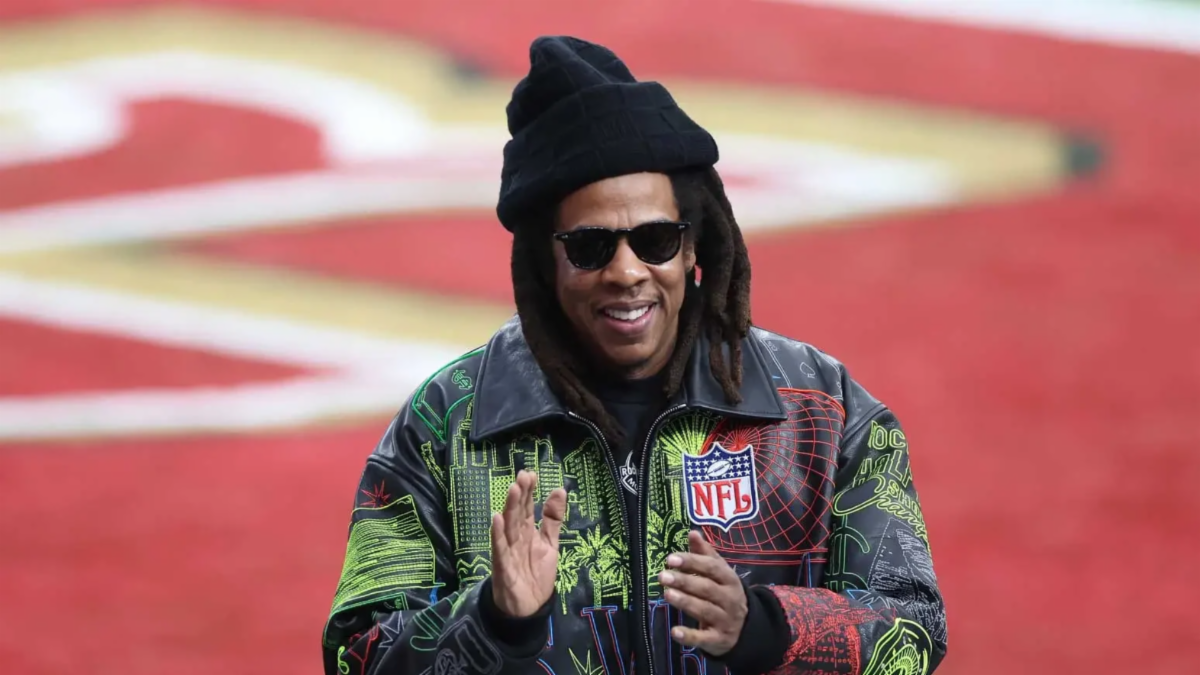
After carefully considering some of the biggest names in music, Jay-Z has reportedly decided that the best person to headline next year’s Super Bowl halftime show is… Jay-Z.
It’s an inspiring reminder that sometimes the most qualified candidate is the person conducting the interviews.
According to Puck News, the 56-year-old rapper has selected himself to perform at Super Bowl LXI on February 14, 2027, at SoFi Stadium in Los Angeles.
Miley Cyrus and Justin Bieber were reportedly among the other artists considered, but neither could compete with Jay-Z’s most impressive qualification: being Jay-Z.
99 problems, but picking the headliner ain’t one
For anyone wondering how the rapper managed to give himself one of the biggest gigs in entertainment, the answer goes back to 2019.
That’s when the NFL signed a partnership with Jay-Z’s entertainment company, Roc Nation, giving him significant control over the selection and production of the Super Bowl halftime show.
The agreement, reportedly worth $5 million annually, was renewed for another five years in 2024.
Since then, Roc Nation has helped deliver performances from Shakira and Jennifer Lopez, Rihanna, Usher, Kendrick Lamar, and most recently, Bad Bunny.
Now, after seven years of handing the spotlight to other artists, Jay-Z appears ready to take it himself.
Neither the NFL nor Roc Nation has officially confirmed the selection, but an announcement could come as early as this weekend, when Jay-Z is scheduled to perform two shows at SoFi Stadium.
The timing wouldn’t exactly be random.
Jay-Z has spent much of 2026 celebrating his career, including the 30th anniversary of his debut album Reasonable Doubt and the 25th anniversary of The Blueprint.
His recent run includes three sold-out shows at Yankee Stadium that reportedly grossed more than $42 million, a $12 million performance in Paris, and a reunion of the Fugees during his London concerts.
He’s also released an eight-part HBO documentary featuring conversations with legendary producer Rick Rubin about his music, career, and legacy.
A Super Bowl performance would be a fitting addition to that résumé, particularly for an artist who hasn’t released a solo studio album since 2017.
And with a catalog of collaborations stretching across decades, the potential guest list is almost as interesting as the headliner. Rihanna, Kanye West, the Fugees, and, of course, Beyoncé could all make for memorable appearances, although none have been announced.
Considering Beyoncé has already performed at two Super Bowl halftime shows, getting her onstage might be the easiest part of the whole production.
Despite the enormous audience, Super Bowl halftime performers don’t receive a traditional appearance fee from the NFL. Artists generally receive only union-scale compensation, while the league and its partners cover production expenses.
The real payday comes from exposure.
This year’s halftime performance by Bad Bunny drew an average of 128.2 million U.S. viewers, and his domestic music streams jumped 175% the following Monday, according to Luminate.
That’s a pretty effective promotional campaign for roughly 15 minutes of work.
For Jay-Z, already a billionaire with an extensive business empire, the opportunity is likely more about cementing his place in music history than selling a few extra records.
Still, there’s something impressive about overseeing one of the most coveted jobs in entertainment for seven years before eventually deciding you’ve earned a promotion.
Sometimes it’s not about who you know. It’s about being the guy who decides.


We’re now posting freight on the Trusted Freight Exchange (TFX), a secure, Highway-powered network made for verified carriers like you.
It’s built right into Highway, free to use, and designed to connect you with quality freight fast.
Every KCH load on TFX is:
With TFX, you skip the back-and-forth and get straight to hauling.
The U.S. has 23 million truck parking spots. You should be able to find one without feeling like you’re on a wild goose chase.
We’re teaming up with Truck Parking Club to make that happen.
Use code KCH25 for $25 off your next reservation.
Less wandering. More rest.
Designed for shippers who want straightforward market insight and smarter freight strategies.