


Good morning, and welcome to The Ship Show!
With Halloween just three days away, I’d like to discuss one of the strangest traditions we’ve collectively agreed is normal: Trick-or-treating.
Once a year, we encourage children to disguise themselves, approach the homes of complete strangers, and demand payment in chocolate. We’ve somehow decided this is adorable.
Even the greeting is suspicious. “Trick or treat” isn’t really a question. It’s an ultimatum. Give me candy, or there will be consequences.
Coming from a six-year-old dressed as Spider-Man, it’s charming. Coming from anyone old enough to drive, it’s extortion.
And the history actually supports this interpretation.
The tradition has roots in ancient Celtic celebrations of Samhain, when people believed spirits could cross into the living world.
Later, Europeans developed customs like “souling,” where people went door-to-door offering prayers for the dead in exchange for little cakes, and “guising,” where costumed children performed songs, poems, or jokes in exchange for food.
So originally, you actually had to earn your candy. Somewhere along the way, we eliminated that requirement.
By the early 1900s, Halloween in America had become an absolute nightmare for homeowners. Kids were soaping windows, overturning outhouses, stealing gates, and generally treating October 31 as an annual opportunity to commit property crimes.
The solution was to encourage a friendlier exchange: Give the children candy, and perhaps they’ll leave your house alone.
Following World War II, sugar rationing ended, suburbs expanded, and trick-or-treating became a nationwide phenomenon.
And just like that, America had successfully negotiated a protection racket with its elementary school population.
Now we spend billions of dollars annually participating in this arrangement. We purchase enormous bags of candy, sit patiently by the door, and reward a four-foot-tall inflatable dinosaur for showing up on our property.
And when the candy runs out, we turn off every light and pretend we’re not home.
We’ve become hostages in our own houses, and somehow it’s one of the most beloved holidays of the year.
– Greyson Harris
In this week’s issue:
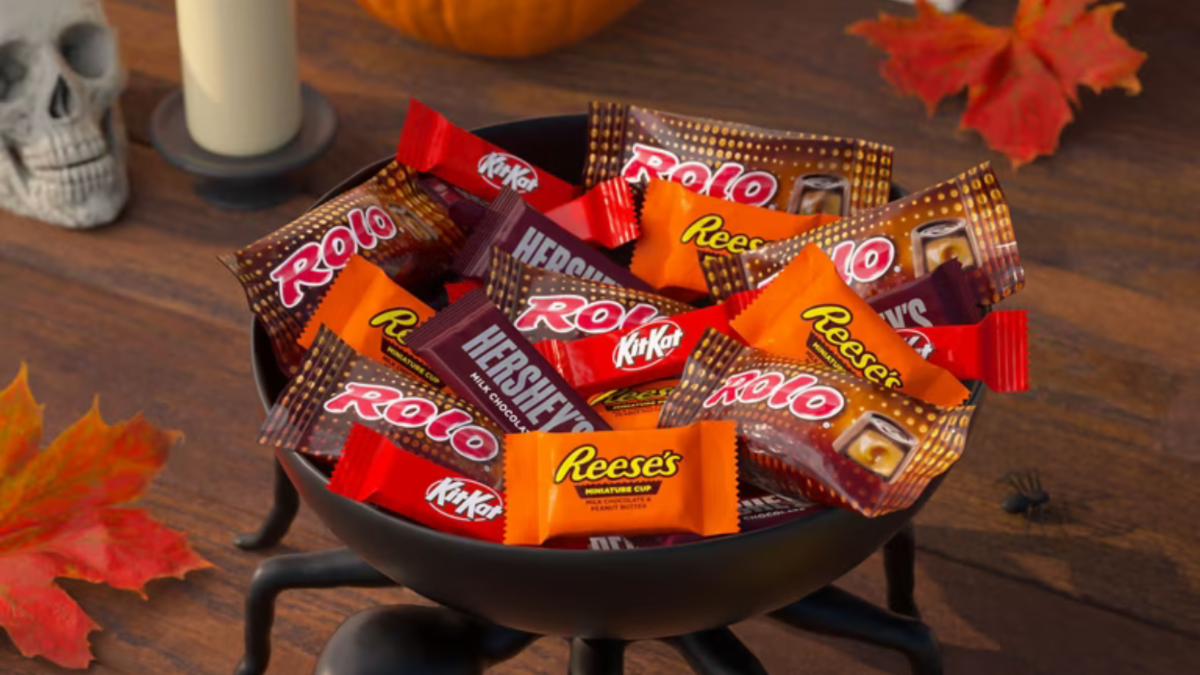
Halloween is Saturday, and Americans are preparing for another year of elaborate decorations, questionable costumes, and spending an unreasonable amount of money on candy for children they’ve never met.
Unfortunately, that last tradition is getting considerably more expensive.
According to a new analysis from Groundwork Collaborative and the Century Foundation, Halloween candy prices have jumped 15.3% compared to last year, more than four times the overall inflation rate.
Fun-sized candy, full-sized prices
The price increases are hitting just about every corner of the candy aisle, including chocolate, gummies, and fruit-flavored favorites.
Here’s how prices for popular Halloween candy packs have changed year-over-year:
At this rate, the house handing out full-sized candy bars is going to need to start checking credit scores.
Cocoa conundrum
Some of the price increases can be traced back to the global cocoa shortage that sent chocolate production costs soaring in 2023 and 2024.
Extreme drought conditions and poor harvests in West Africa, which produces roughly 70% of the world’s cocoa, pushed prices to historic highs.
But there’s an interesting development: Cocoa prices have since fallen by more than half from their 2024 peak, thanks to improving supplies and weakening demand.
Sugar and corn syrup prices have also declined over the past year, dropping 10% and 4%, respectively.
So why is Halloween candy still getting more expensive?
More tricks, fewer treats
Part of the explanation involves how manufacturers purchase ingredients. Many chocolate producers lock in cocoa prices months or even years in advance, meaning they’re still working through supplies purchased when prices were substantially higher.
Tariffs, packaging expenses, and elevated transportation costs have also added pressure throughout the supply chain.
However, Groundwork Collaborative argues that manufacturers are keeping prices artificially high to protect profits, pointing to Hershey’s second-quarter gross profit margin of 45%, up from 30% a year earlier.
The organization says greater industry consolidation has given major candy manufacturers more freedom to raise prices without losing substantial market share.
And there are signs that consumers are finally reaching their limit.
Last week, Lindt & Sprüngli Executive Chairman Ernst Tanner admitted the company miscalculated how much customers would tolerate in price increases, particularly in Germany.
The Swiss chocolate maker has since removed its CEO and reduced prices on some products after disappointing sales.
Turns out there’s a ceiling on what people will pay for chocolate, even when it comes wrapped in gold foil.
Spooky season stops for no one
Despite the price hikes, Americans aren’t ready to abandon their annual tradition of buying $40 worth of candy for neighborhood children and then eating half of it themselves.
According to the National Retail Federation, total Halloween spending is expected to reach $13.5 billion this year, including $4.1 billion on candy alone.
An estimated 96% of Halloween shoppers plan to purchase candy, although many are searching for discounts, comparing prices, and adjusting how much they buy.
Early sales data suggests those adjustments are already happening. Research firm Consumer Edge found that, through October 15, chocolate sales volumes were down 7% compared to last year, while non-chocolate candy volumes had fallen nearly 11%.
Still, Halloween has survived plenty of economic uncertainty, and most Americans aren’t about to cancel trick-or-treating over expensive Reese’s.
Of course, there’s always the nuclear option: becoming the house that hands out candy corn.
It’s cheap, it’s festive, and you’ll probably never have to worry about trick-or-treaters coming back next year.
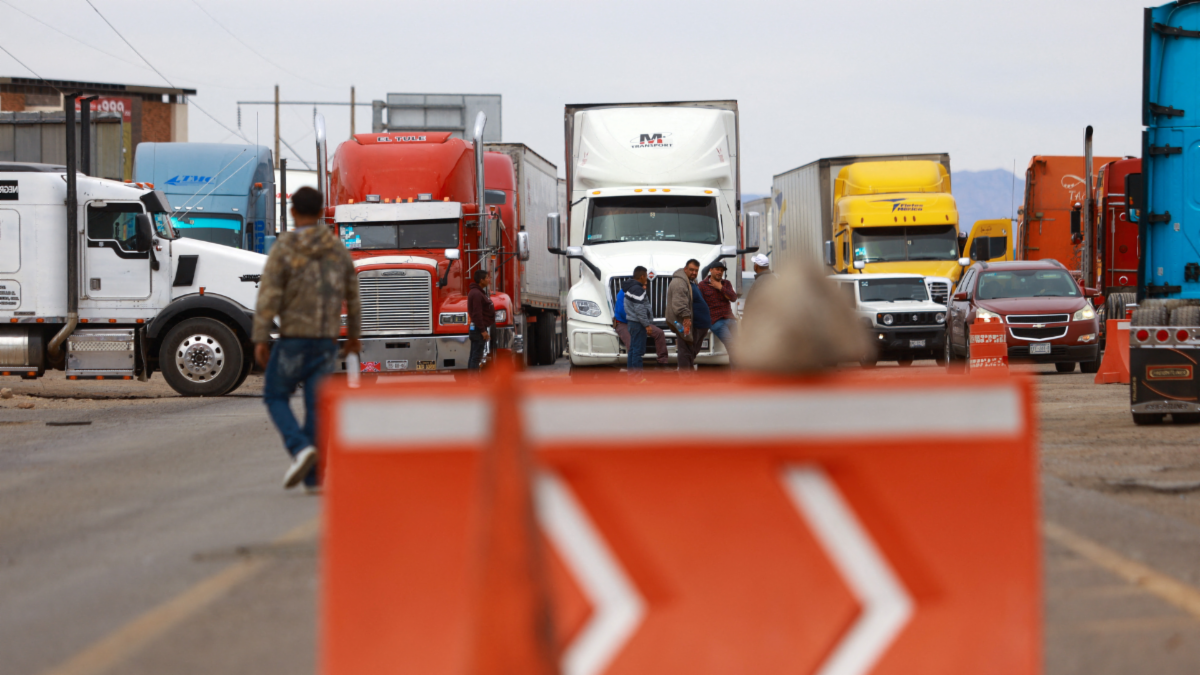
Mexico’s trucking industry spent Monday demonstrating that the best way to get the government’s attention is to park a few hundred trucks in the middle of the highway.
After launching an indefinite nationwide strike on October 26, Mexican trucking organizations reached an agreement with federal officials Tuesday to end the demonstrations and begin negotiations over cargo theft, highway violence, extortion, and rising operating costs.
The agreement brings an end to two days of disruptions across major freight corridors, although the industry’s underlying problems remain largely unresolved.
Living dangerously
Highway security was the biggest issue behind the strike, and truckers have some fairly compelling reasons to be upset.
According to Mexico’s National Chamber of Freight Transportation (CANACAR), the industry has recorded 1,125 robberies and 15 driver deaths so far this year.
Drivers also face deteriorating highways, excessive towing fees, and extortion. In some areas, transporting freight has become less about making deliveries and more about making it to the destination with the truck, cargo, and driver still accounted for.
And the problems don’t stop there.
Trucking organizations are also protesting proposed changes to Mexico’s 2027 fiscal package that would restrict eligibility for certain transportation tax benefits, potentially adding another expense to an industry already dealing with rising insurance, security, and operating costs.
Between criminals demanding money on the highways and the government looking to collect more of it, trucking companies aren’t particularly thrilled with their options.
Bumper to bumper
The demonstrations wasted little time creating problems.
By Monday morning, Mexico’s Interior Ministry reported:
Side note: CANACAR disputed the government’s figures, claiming demonstrations extended across all 32 Mexican states.
The protests also raised concerns about cross-border shipments moving through Nuevo Laredo, directly across from Laredo, Texas, the busiest inland commercial port of entry in the United States.
Four meetings and a long to-do list
On Tuesday, CANACAR President Augusto Ramos Melo met with Interior Ministry officials and representatives from other trucking organizations, ultimately agreeing to suspend the protests in exchange for four high-level negotiating sessions.
The discussions will address five major issues:
Financial discussions have already begun, with labor and infrastructure meetings scheduled for later this week.
Interestingly, the meeting specifically addressing highway security, arguably the biggest reason truckers went on strike in the first place, still doesn’t have a confirmed date.
CANACAR says demonstrators have been instructed to clear the highways, and government officials have committed to continuing discussions.
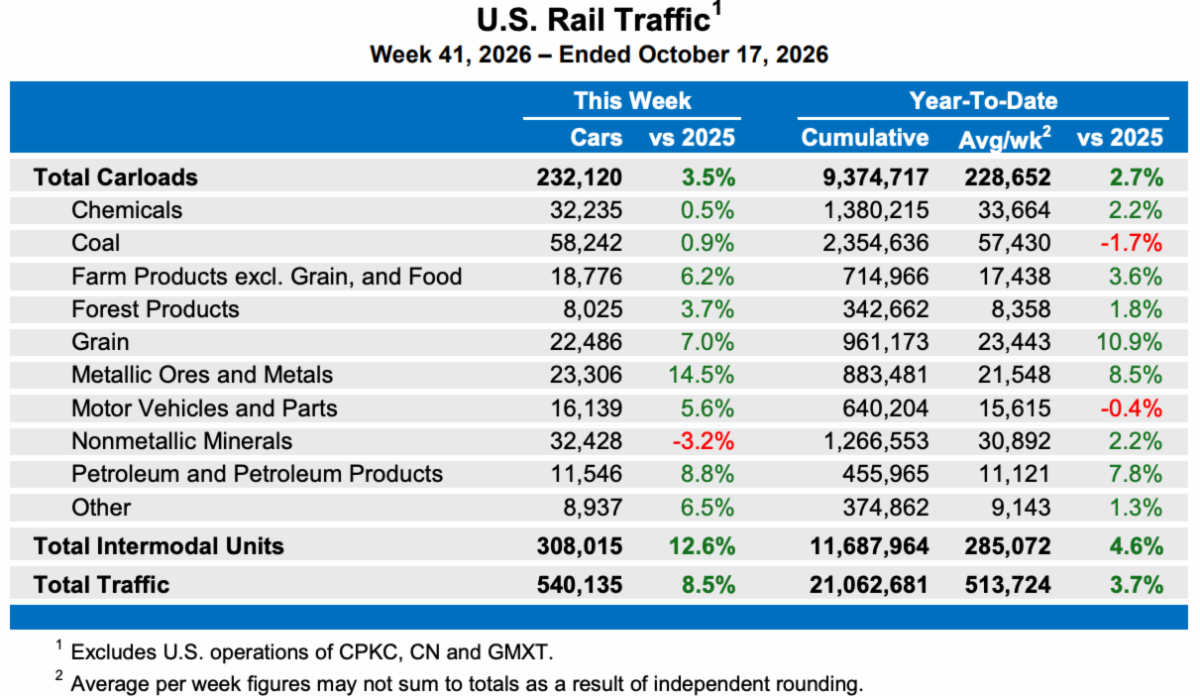
🚂 U.S. rail traffic picks up steam: U.S. railroads handled 540,135 carloads and intermodal units during the week ending October 17, an 8.5% increase year-over-year, according to the Association of American Railroads. Intermodal shipments climbed 12.6%, while carloads rose 3.5%, with nine of the 10 major commodity groups reporting gains. Metallic ores and metals led the way with a 14.5% increase, followed by petroleum products and grain, as total U.S. rail volume for the first 41 weeks of 2026 remained 3.7% ahead of last year’s pace.
🏗️ Port rail backlogs continue to grow: Nearly 35,700 import containers were awaiting trains at the ports of Los Angeles and Long Beach on October 26, as record cargo volumes and reported railcar shortages slowed inland freight movement. More than 10,500 containers had been sitting for at least nine days, with 41.4% of rail-bound containers at Los Angeles reaching that threshold compared to 15.1% at Long Beach. Average rail-container dwell time across the port complex climbed to 7.19 days in September, up from 6.75 days in August, adding pressure to inland supply chains.
✈️ Asia-Pacific air cargo rebounds after Golden Week: Global air cargo volumes rose 2% during the week ending October 18, driven by a 9% surge in Asia-Pacific exports following China’s Golden Week holiday, according to WorldACD. Shipments from Asia to the U.S. climbed 10% week-over-week, while Europe-bound volumes increased 13%, led by strong recoveries in China, Hong Kong, and South Korea. Year-over-year, Asia-to-U.S. volumes remained 14% higher, supported by demand for AI-related shipments, while Europe-bound traffic fell 16% amid tighter restrictions on e-commerce imports.
⛽️ Diesel prices climb for second straight week: The national average on-highway diesel price rose 7.6 cents to $6.352 per gallon for the week ending October 26, according to the Energy Information Administration. The Lower Atlantic saw the largest regional increase, climbing 15 cents, followed by the Midwest at 12.8 cents, while West Coast prices declined 6.5 cents. National diesel prices remain $2.634 per gallon above year-ago levels
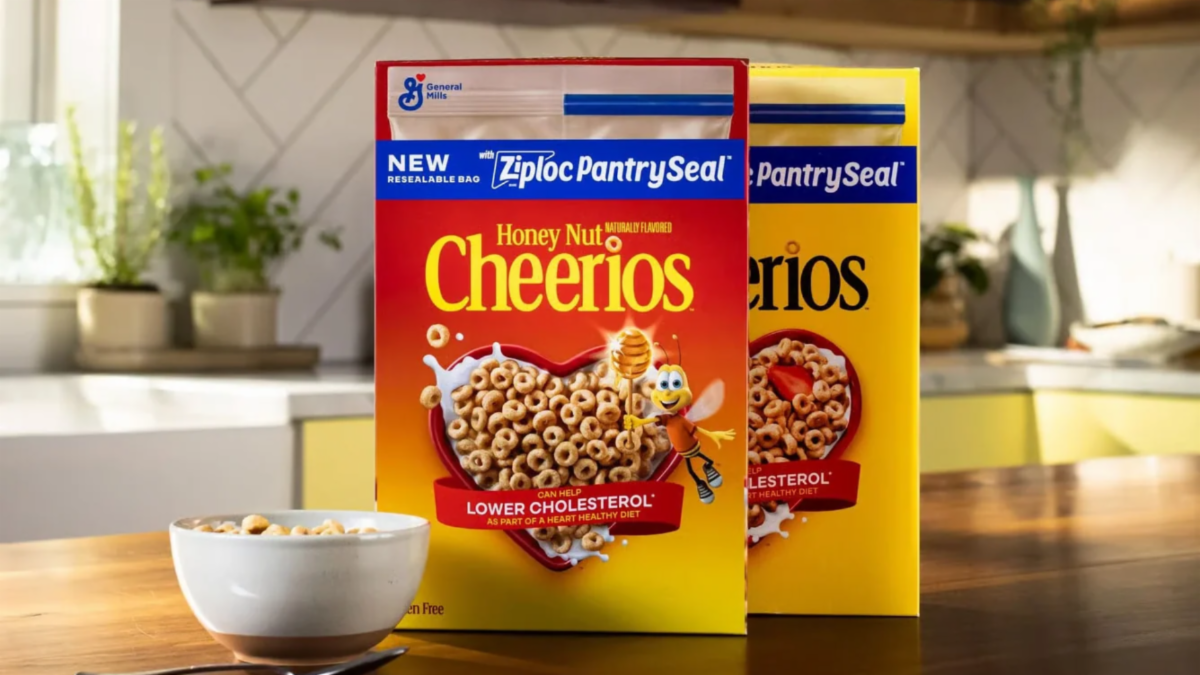
For 85 years, cereal companies have relied on a sophisticated freshness-preservation system involving a cardboard tab, a plastic bag, and the faint hope that folding it over three times might actually accomplish something.
Well, the future has finally arrived.
On Tuesday, General Mills announced that Cheerios is partnering with Ziploc to introduce the first resealable bag inside a traditional cereal box.
That’s right. Humanity put a man on the moon 57 years ago, but we’re just now figuring out how to keep Cheerios from going stale.
The greatest thing since boxed cereal
The new packaging, called Ziploc PantrySeal, features a resealable zipper that opens partially across the top, creating a built-in pour spout. Once you’ve filled your bowl, you simply seal it shut.
No more rolling the bag down, wrestling with the cardboard flaps, or transferring your entire cereal supply into a plastic container like you’re organizing a laboratory.
According to a December 2025 survey conducted by consumer insights platform Suzy, 90% of cereal consumers already take additional steps to preserve freshness, including folding, rolling, clipping, or transferring their cereal into another container.
General Mills says it receives hundreds of thousands of requests and comments every year asking for an easier way to reseal cereal.
The general public can now rest easy knowing that their cries have been heard.
The latest in cereal technology
As ridiculous as it sounds, adding a zipper to a cereal bag isn’t quite as simple as it seems.
One of the biggest obstacles has been cost. Resealable packaging is more expensive to produce, and cereal manufacturers have historically been reluctant to make changes that could push prices higher.
There’s also the production issue.
General Mills’ Buffalo, New York, facility produces nearly one box of Cheerios every second, meaning Ziploc had to develop a closure system that wouldn’t interfere with the operation.
That facility also happens to be where Cheerios was first manufactured in 1941, bringing the cereal’s 85-year journey full circle.
Believe it or not, big cereal needed a win
Traditional breakfast cereals have been facing increasing competition from breakfast sandwiches, protein-heavy alternatives, and other convenient morning meals.
Meanwhile, General Mills recently reported a 3% decline in companywide sales during its fiscal first quarter, bringing revenue to $4.39 billion. While the results exceeded Wall Street expectations, the company’s North American retail business continues to face pressure.
A better cereal bag probably won’t reverse the industry’s breakfast struggles overnight, but it’s a relatively simple way to make an 85-year-old product feel new again.
The resealable packaging is available for original Cheerios and Honey Nut Cheerios, exclusively through Walmart’s website as of October 27, with a nationwide retail rollout planned in the coming months.
And for anyone wondering, the traditional cereal bag isn’t going away. The resealable version is being offered as an additional option.
So if you’re particularly attached to the familiar routine of folding a plastic bag into a shape that immediately unfolds itself, General Mills hasn’t forgotten about you.
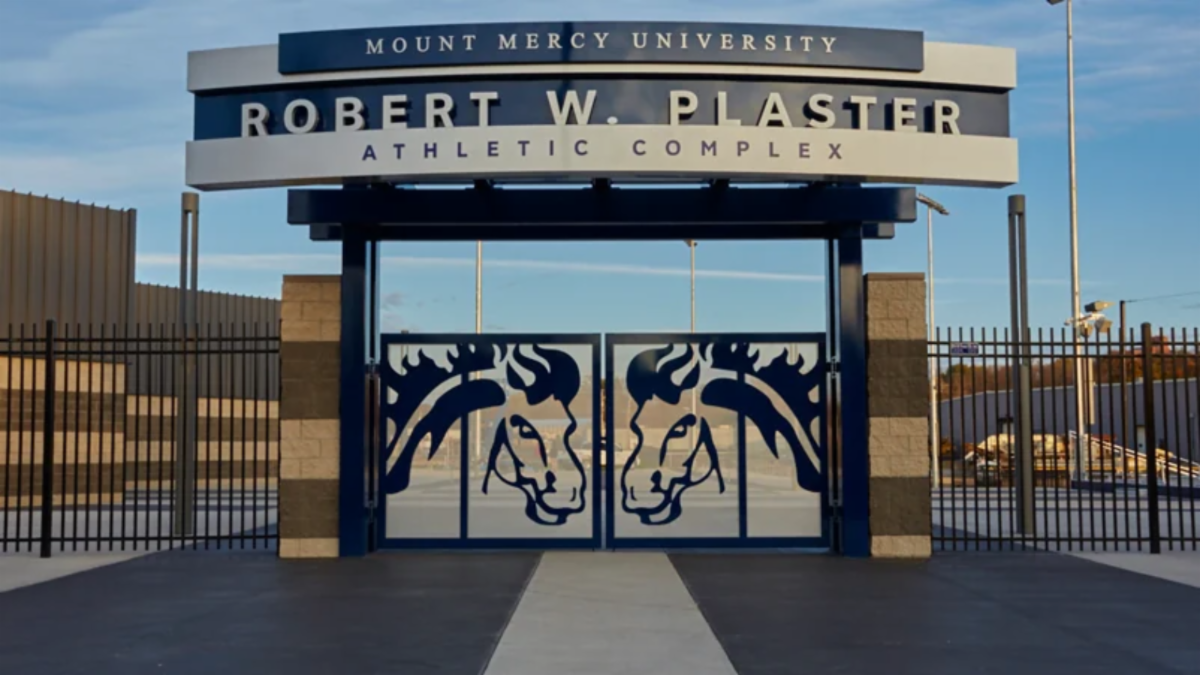
College football is usually associated with packed stadiums, multimillion-dollar coaching contracts, and fan bases willing to ruin their entire weekend over a missed field goal (or a made one – sorry, Tennessee).
But for a growing number of smaller universities, football is becoming something else entirely: an enrollment strategy.
According to the Associated Press, 10 four-year colleges launched or revived football programs this fall, the most in a single year since 2013. Seven more schools have announced plans to follow in the coming years.
And while school administrators certainly appreciate a good touchdown, they’re considerably more interested in what happens when 100 new players show up and start paying tuition.
In the trenches
Colleges across the country are facing a demographic problem that’s only expected to get worse.
According to the Western Interstate Commission for Higher Education, the number of U.S. high school graduates peaked at approximately 3.9 million in 2025 and is projected to decline nearly 13% by 2041.
Fewer high school graduates mean fewer potential college students, and smaller private universities are particularly vulnerable.
Enter football.
A single football roster can bring approximately 100 students to campus, generating revenue through tuition, housing, meal plans, and other expenses.
Add in the possibility of alumni donations, ticket sales, and a more active campus community, and suddenly an expensive athletic program starts looking like a pretty attractive investment.
Several schools are already seeing results:
At Whittier, alumni contributed more than $800,000 to help bring back the program.
Nothing inspires former college students to open their wallets quite like the opportunity to watch their alma mater lose by three touchdowns on a Saturday afternoon.
Financial Hail Mary
Of course, starting a football program isn’t as simple as buying helmets and waiting for tuition checks to arrive.
Football is one of the most expensive college sports to operate, requiring coaches, facilities, equipment, travel, insurance, and extensive medical support.
And research suggests the financial benefits aren’t necessarily permanent.
A 2024 University of Georgia (Go Dawgs) study examined 36 colleges that added football programs between 2004 and 2016:
In other words, football might bring more students to campus, but keeping the program financially sustainable is a completely different game.
The gridiron meets the spreadsheet
Despite the risks, college football continues expanding.
According to the National Football Foundation, 778 colleges and universities now field football teams nationwide, with 62 programs launched or reinstated over the past decade.
The renewed interest isn’t entirely about money, either.
Administrators say football creates a stronger sense of community, increases student engagement, and gives alumni another reason to return to campus.
At Azusa Pacific, a $1 million private donation helped restore the program, while a move from NCAA Division II to Division III reduced travel expenses by allowing the team to compete against nearby schools.
For smaller colleges facing declining enrollment and uncertain financial futures, the appeal is understandable.
A football team can attract students, energize a campus, and potentially generate much-needed revenue.
Whether it’s enough to keep struggling institutions afloat remains to be seen.



We’re now posting freight on the Trusted Freight Exchange (TFX), a secure, Highway-powered network made for verified carriers like you.
It’s built right into Highway, free to use, and designed to connect you with quality freight fast.
Every KCH load on TFX is:
With TFX, you skip the back-and-forth and get straight to hauling.
The U.S. has 23 million truck parking spots. You should be able to find one without feeling like you’re on a wild goose chase.
We’re teaming up with Truck Parking Club to make that happen.
Use code KCH25 for $25 off your next reservation.
Less wandering. More rest.
Designed for shippers who want straightforward market insight and smarter freight strategies.