


Good morning, and welcome to The Ship Show!
It is Wednesday, my dudes.
And before you assume that phrase was invented by the internet, a skateboard company, or some guy named Kyle in 2007, the word “dude” has been doing laps around the English language for well over a century.
Back in the 1880s, though, being called a dude was not particularly flattering.
The term was originally aimed at overly fashionable young men, especially wealthy New Yorkers who dressed with the kind of commitment normally reserved for royal weddings.
Think immaculate clothes, dramatic accessories, carefully cultivated accents, and absolutely no intention of doing manual labor before lunch.
Newspapers mocked them relentlessly. Writers turned them into punchlines. One poem even asked God to “spare us this enormity,” which is an objectively incredible amount of emotional energy to spend on a well-dressed man.
The leading theory is that “dude” evolved from “Yankee Doodle,” another term originally used to mock Americans trying a little too hard to imitate European fashion.
City people visiting ranches became “dudes,” ranches catering to those tourists became “dude ranches,” and somewhere along the way, the insult completely lost control of its own destiny.
By the 20th century, “dude” had worked its way through jazz culture, surf culture, skate culture, movies, and everyday conversation until it became one of the most versatile words in the English language.
Depending entirely on tone, it can express excitement, disbelief, concern, anger, admiration, or the realization that your friend has just made an exceptionally poor decision.
Language is funny. Dudes are awesome.
Happy Wednesday, my dudes.
– Greyson Harris
In this week’s issue:


For a brief moment, it looked like oil producers in the Persian Gulf had figured out how to make the Strait of Hormuz work again.
It was expensive, complicated, and involved enough ship-to-ship transfers to make a logistics manager develop a nervous twitch, but oil was moving.
By September, Gulf exports had climbed close to where they were before the war began earlier this year.
Then the tankers started getting hit again.
Bad week to be a tanker
There have been at least eight vessels attacked around the Strait of Hormuz between September 28 and early October, most near the narrowest portion of the waterway:
Several vessels have also been traveling with AIS tracking switched off, making the full picture harder to pin down and offering a fairly grim snapshot of what “normal operations” currently look like in Hormuz.
Back to normal, give or take the projectiles
Before the latest attacks, Gulf producers had made remarkable progress rebuilding oil flows disrupted by months of fighting.
Exports of crude, condensate, and refined products from Gulf countries excluding Iran averaged roughly 19.2 million barrels per day in September, about 81% of their prewar level of 23.6 million barrels. Crude and condensate alone recovered to about 91% of prewar levels, helped largely by a sharp rebound in Saudi shipments.
Some days were even better. Middle Eastern crude and condensate exports averaged about 18.3 million barrels per day late last month and exceeded prewar levels on 14 days during September.
That would be an encouraging development if the method for achieving it wasn’t essentially “just send them in and cross your fingers.”
The broader tanker market isn’t exactly offering coupons, either. Spot rates for some Middle East-to-Asia tanker routes have climbed above $1.2 million per day as ship availability tightens and owners price in the slight inconvenience of navigating an active conflict zone.
Diesel disaster
The bigger problem is that getting oil out of the Gulf and getting the right kind of oil product out of the Gulf are currently two different problems.
While crude and condensate exports recovered to 91% of prewar levels in September, refined-fuel exports were still running at only about 60%. Damage to regional refineries and other disruptions have left diesel and jet fuel particularly tight.
That’s one reason crude can be flowing again while diesel prices remain stubbornly high.
Bring in the emergency barrels
With fuel prices still elevated, G7 countries agreed October 2 to release 100 million barrels of crude and petroleum products from emergency reserves, an effort aimed especially at easing pressure on diesel markets.
The countries also pledged to avoid restrictions on energy trade between G7 members, while governments work to squeeze additional output from refineries.
That agreement also appears to have shelved, at least for now, a potential U.S. diesel export ban, which had raised concerns that restricting American shipments could further tighten global supplies.
Inventory down, prices up
The Gulf’s September rebound proved something important: producers have become remarkably good at finding ways around a disrupted Strait of Hormuz.
It also demonstrated just how expensive those workarounds are.
Since the latest round of attacks began, crude exports have reportedly slipped roughly 2 million to 3 million barrels per day below prewar levels, while tanker costs, insurance premiums, refinery outages, and security concerns continue to ripple through global fuel markets.
The issue isn’t simply whether enough oil exists underground. It’s whether somebody can safely refine it, load it onto a ship, get that ship through one of the world’s most dangerous stretches of water, and deliver it without spending an absurd amount of money along the way.
And that’s getting a lot harder to do.
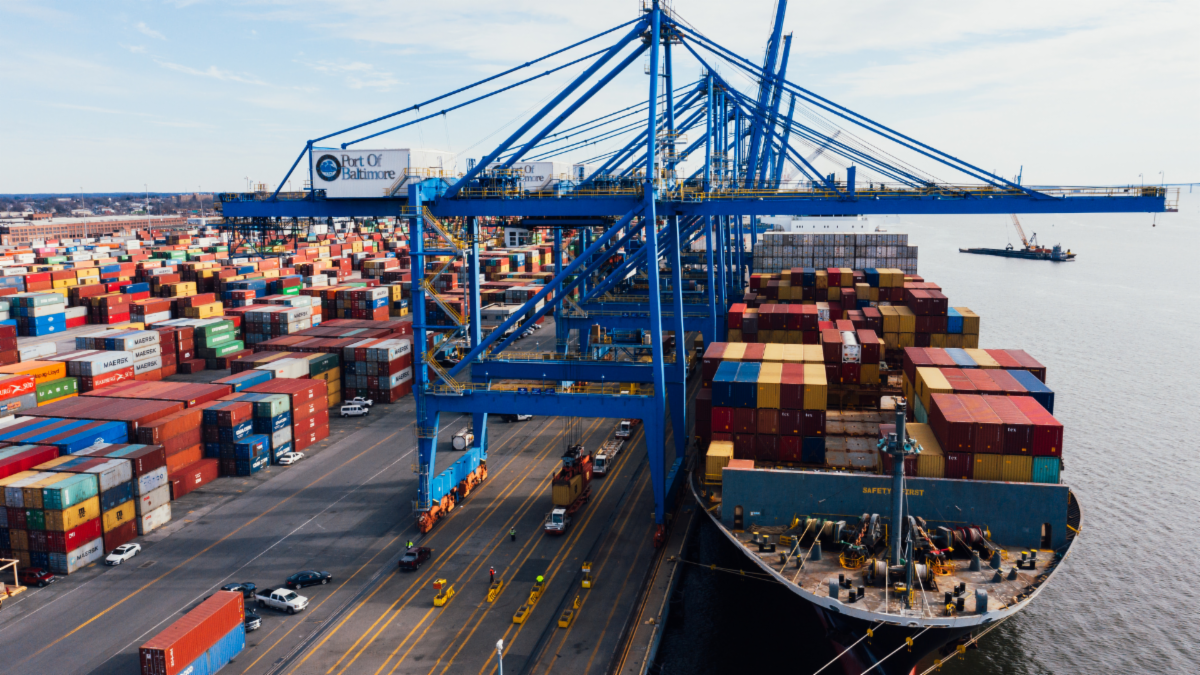
The U.S. spent August importing basically everything it could get through the front door.
The nation’s trade deficit widened 13.7% to $105.6 billion, its largest since March 2025, as total imports climbed to an all-time record of $420.8 billion.
Exports increased too, rising 1.4% to $315.2 billion, but imports jumped 4.3%, which is generally how you end up with another $12.7 billion added to the wrong side of the ledger.
And unlike the import frenzy ahead of last year’s tariffs, when companies stocked up on consumer goods before duties arrived, much of this latest surge is being driven by something slightly more expensive than extra patio furniture.
Digital dash
Capital goods imports reached a record $146.4 billion in August, up $6.2 billion from July. Semiconductor imports alone increased $2.4 billion, while other industrial machinery rose another $1.3 billion.
That fits neatly into the massive buildout underway around artificial intelligence, data centers, and computing infrastructure. U.S. companies are pouring money into equipment, but much of the hardware needed to make that investment happen is still manufactured overseas.
The trend didn’t exactly begin in August, either. In July, capital goods imports jumped $14.4 billion, including increases of $6.9 billion for computers, $6.6 billion for computer accessories, and $1.2 billion for semiconductors.
Industrial supplies added another sizable piece to August’s import bill, increasing $9.1 billion, including $3.3 billion more in crude oil and $3.1 billion more in nonmonetary gold. Oil flows have been particularly volatile amid the ongoing disruption surrounding the Strait of Hormuz.
Gold has also been bouncing around the trade numbers enough that it deserves an asterisk. BEA removes nonmonetary gold trade when calculating GDP, meaning the headline deficit can look a little uglier than the portion that actually feeds into economic growth.
Tariffs try to take a toll
The numbers are noteworthy because shrinking the trade deficit has been one of the central arguments behind the Trump administration’s tariff policies.
Instead, August produced the highest imports ever recorded.
That doesn’t necessarily mean tariffs have had no effect. Through the first eight months of 2026, the total trade deficit was still $138.2 billion, or 19.9%, smaller than during the same period last year. Exports are up 11.8% year to date, compared with a 4.4% increase in imports.
What has changed is where some of that freight is coming from.
Imports from Mexico reached a record $60.6 billion in August, while imports from Vietnam hit a record $26.5 billion, according to the Census Bureau. The resulting goods deficits included $27.7 billion with Mexico, $24 billion with Vietnam, and $18.3 billion with Taiwan. China, once comfortably atop this particular leaderboard, came in at $16.4 billion.
That’s gross (domestic product)
A wider trade deficit subtracts from GDP because imports are removed when calculating domestic production.
Following the August trade report, the Atlanta Fed’s GDPNow model still estimates third-quarter economic growth at a healthy 3.7%, but its estimated drag from net exports worsened from 2.59 percentage points to 2.69 percentage points.
That makes August’s report a slightly strange economic cocktail.
Strong imports can signal healthy demand and heavy business investment, particularly when companies are buying machinery and semiconductors rather than merely filling warehouses with consumer goods.
At the same time, relying on overseas factories to satisfy that investment pushes the trade deficit higher and subtracts from measured U.S. growth.
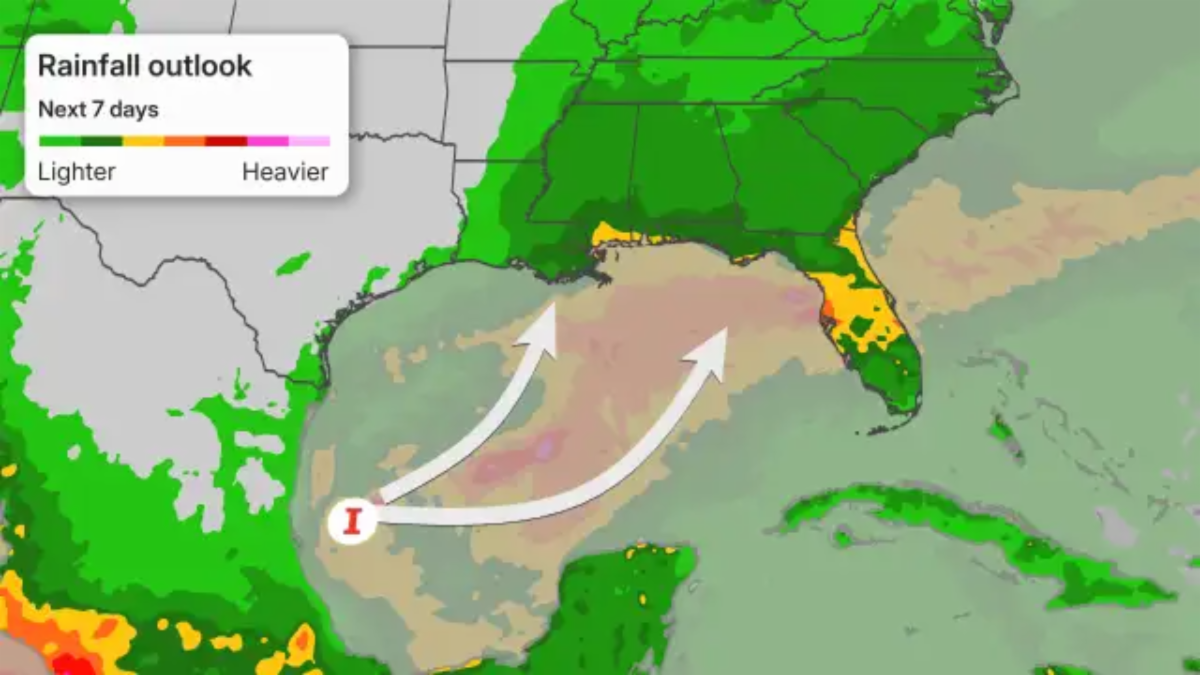
🌧️ Gulf tropical system threatens more flooding: A developing system in the southwestern Gulf could become Tropical Storm Isaias this week, with forecast guidance increasingly favoring a track toward the northern Gulf Coast between Louisiana and the Florida Panhandle. Rain chances are expected to increase by Friday, with widespread heavy rainfall possible across the Gulf Coast and Southeast through the weekend. Already saturated areas could face additional flash flooding, while heavy rain extending into higher elevations could raise the risk of landslides.
🚂 Rail traffic keeps climbing: U.S. railroads moved 537,397 carloads and intermodal units during the week ending September 26, up 4.8% from a year earlier. Carloads rose 3% to 235,787, while intermodal volume increased 6.3% to 301,610 containers and trailers. Through the first 38 weeks of 2026, total U.S. rail traffic is up 3.5% year over year, with intermodal gaining 4.1% and carloads up 2.7%.
🚢 Asia-U.S. container rates appear to have peaked: Xeneta says spot rates from Asia to the U.S. likely hit their post-Hormuz crisis high, with Oct. 1 averages reaching $8,346 per FEU to the West Coast and $11,523 to the East Coast, more than four times pre-crisis levels. Easing congestion in Asia, the end of typhoon season, and slower exports during China’s Golden Week are beginning to cool the market, though rates are expected to remain elevated through year-end. Xeneta forecasts East Coast rates falling toward $6,000-$7,000 per FEU over the next three months, while West Coast rates could settle around $4,500-$5,500.
✈️ Airfreight rates begin their seasonal climb: Average Hong Kong-to-North America airfreight rates climbed to $7.02 per kg in September from $6.98 in August, while Hong Kong-to-Europe rates rose to $4.80 from $4.58, according to TAC Index. Compared with a year ago, rates are 31% higher to North America and 8.8% higher to Europe.
⛽️ Diesel extends its retreat: The DOE/EIA benchmark diesel price fell for the second consecutive week, dropping 18.3 cents to $6.199 per gallon. The decline offers another bit of relief for carriers after fuel prices surged to record territory in September.

Astronomers digging through 27-year-old Hubble data may have discovered something nobody recognized the first time around: a planet that was born after its star died.
Researchers studying the white dwarf HS 0209+0832 (super catchy and memorable name) believe it may be orbited by a “second-generation planet,” meaning a world that formed from material blown into space during the death of the original star.
The discovery, published Monday in Nature Astronomy, came after researchers revisited observations Hubble made in 1999 and finally identified chemical fingerprints that had spent decades sitting in the data without an explanation.
Death was only the beginning
Stars roughly similar to our Sun eventually exhaust their nuclear fuel, expand into red giants, shed their outer layers, and leave behind extremely dense cores known as white dwarfs.
Normally, that sounds like the end of the story.
But astronomers now think some of that expelled material around HS 0209+0832 may have settled into a disk and eventually clumped together into an entirely new planet. Unlike Earth, which formed from material left over from the Sun’s birth, this world may have been assembled from the leftovers of the star’s death.
Astronomers have previously suspected that planets orbiting pulsars can form through similar processes, but researchers say nothing equivalent had been identified around a white dwarf before this candidate.
We’ve got chemistry
When Hubble originally observed HS 0209+0832, astronomers found roughly 100 chemical features in its spectrum that they couldn’t identify.
More than two decades later, University of Warwick astronomer Jamie Williams returned to the data with updated atomic databases and discovered that many of those mystery lines matched niobium, along with unusually high levels of other heavy elements.
I know chemistry wasn’t most people’s favorite class in high school, but stick with me.
Niobium isn’t something astronomers expect to find casually hanging around a white dwarf.
Elements heavier than iron can be produced during the violent late stages of stellar evolution, and the niobium surrounding HS 0209+0832 was more than three orders of magnitude more abundant relative to the Sun than researchers expected. The material also looked nothing like the rocky planetary debris commonly seen falling onto other white dwarfs.
In other words, the chemical evidence looked less like the remains of an old planet and more like something constructed from freshly expelled stellar material.
A dangerous dance
NASA’s TESS telescope watched the system for four months and detected a repeating brightness pattern every roughly 4.4 days. Researchers believe that signal could come from a planet orbiting only about 3.7 million miles from the white dwarf.
For reference, Mercury’s average distance from our Sun is roughly 36 miles. So not only is this exoplanet absurdly large, but it’s also incredibly close to its white dwarf.
And life there freakin’ sucks.
HS 0209+0832 is a young white dwarf, only about 5 million years into its cooling process, with a surface temperature around 35,800 Kelvin. Researchers believe its intense radiation is stripping away the planet’s atmosphere, potentially creating a comet-like tail of gas that spirals back toward the white dwarf.
That material could eventually fall onto the star’s surface, which would explain why Hubble can detect the planet’s unusual chemistry there.
So, to review: the star died, possibly created a new planet from its own corpse, and is now slowly eating it.
Space is so metal.



We’re now posting freight on the Trusted Freight Exchange (TFX), a secure, Highway-powered network made for verified carriers like you.
It’s built right into Highway, free to use, and designed to connect you with quality freight fast.
Every KCH load on TFX is:
With TFX, you skip the back-and-forth and get straight to hauling.

The U.S. has 23 million truck parking spots. You should be able to find one without feeling like you’re on a wild goose chase.
We’re teaming up with Truck Parking Club to make that happen.
Use code KCH25 for $25 off your next reservation.
Less wandering. More rest.
Designed for shippers who want straightforward market insight and smarter freight strategies.