


Good morning, and welcome to The Ship Show!
Today is Veteran’s Day, so before we get into our usual hijinks, I want to recognize a few people who have made much more meaningful contributions to this country than anything I’ve accomplished behind a keyboard.
Military service runs in my family. Unfortunately, whatever gene that makes someone brave enough to sign up for it seems to have skipped me entirely.
My grandfather was drafted during Vietnam, which is a pretty terrifying letter to receive in the mail. Fortunately, the Army decided his talents were best utilized in New Jersey. His twin brother was also drafted and stationed stateside, meaning my great-grandmother somehow went two-for-two on having sons drafted during Vietnam without either being sent into combat.
I don’t know what kind of deal she worked out with the federal government, but on behalf of everyone in the family born since then, I’m grateful.
My uncle served in the Navy aboard a submarine, spending months at a time underwater with roughly 100 other men. I get irritated when someone sits next to me on a plane.
He also traveled to some incredible places during his service, although I’m fairly certain the government would prefer I keep those details out of a freight newsletter.
Then there’s my dad, who served as Military Police in Europe. He spent part of his military career stationed in Germany, where I’ve been told he did important things for national security. I’ve also been told he played a considerable amount of ping pong.
I’ll let historians determine the relationship between those two activities.
All three of these men answered a call to serve, whether they volunteered or had the decision made for them. They gave up time, comfort, and control over their own lives to do something bigger than themselves.
And they’re just three of the millions of Americans who have done the same, often under circumstances far more difficult than anything I’ve described here.
I get to spend my Wednesdays making jokes about the news, occasionally irritating my father, and exercising freedoms that are incredibly easy to take for granted.
So, to my grandfather, my uncle, my dad, and every other veteran out there, thank you for your service, your sacrifices, and the freedoms you’ve helped protect.
Especially the freedom to publicly accuse my father of being a government-funded ping pong player. Love you, Dad.
– Greyson Harris
In this week’s issue:

The Headlines
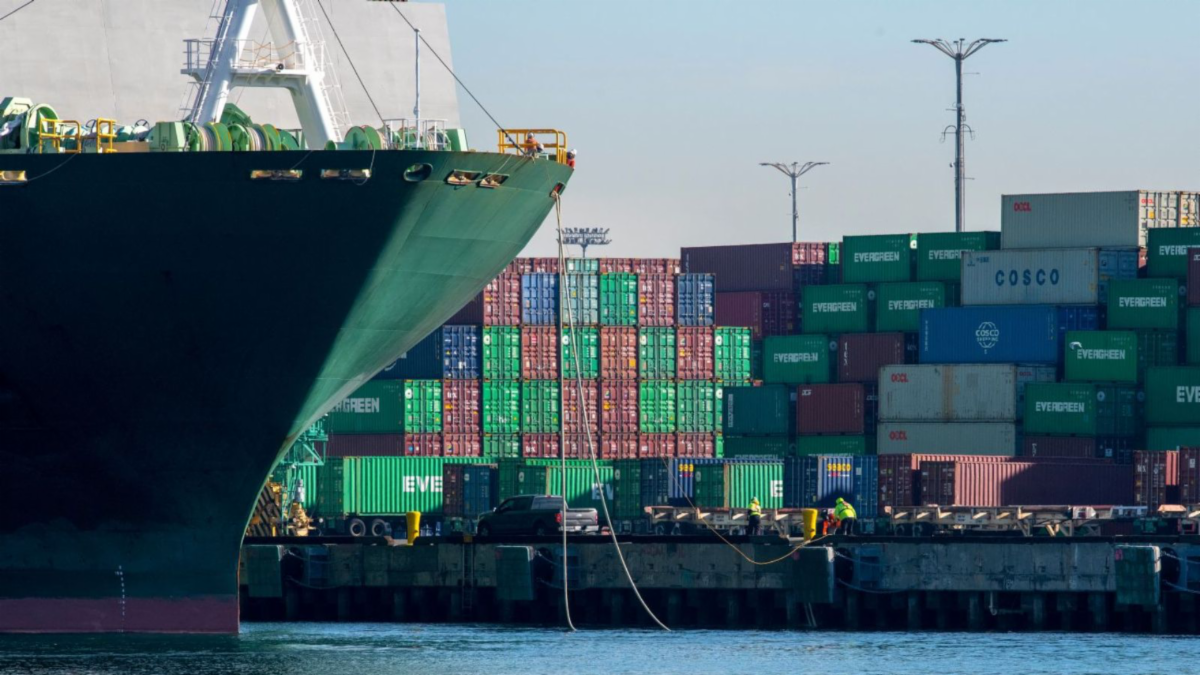
A potential strike at two of America’s busiest ports has been pushed back once again.
The International Longshore and Warehouse Union (ILWU) Local 26, representing roughly 250 security watchmen at the ports of Los Angeles and Long Beach, has agreed to extend its contract through November 20 while negotiations continue.
It’s the third extension in less than two weeks, and while 250 workers might not sound like a group capable of disrupting a major chunk of American trade, these particular employees have quite a bit of leverage.
Small group, big impact
The watchmen’s contract with the Pacific Maritime Association (PMA) expired back in July 2025, and the two sides have spent more than a year trying to negotiate a replacement. Union members voted to authorize a strike in late October, initially setting a November 1 deadline before – like me in college procrastinating an essay – pushing it to November 4, November 6, and now November 20.
The interesting part is just how much disruption 250 workers could cause.
Watchmen are responsible for monitoring terminal gates, inspecting incoming trucks and employees, and keeping cargo secure. They account for just 2% of the ILWU workforce at the two ports, but their reach is considerably larger:
Making matters more complicated, other ILWU dockworkers and marine clerks are expected to honor the watchmen’s picket lines if a strike happens. That means workers who aren’t directly involved in the dispute could also stop working, potentially bringing vessel loading, unloading, and terminal operations to a halt.
For a group representing just 2% of the workforce, that’s some pretty serious bargaining power.
Timing is everything
The strike threat comes as both ports are handling record cargo volumes. Los Angeles processed more than 1.04 million TEUs in September, its busiest month ever, while Long Beach set its own record with 997,177 TEUs.
Combined, the two ports handle roughly one-third of America’s containerized imports, including everything from automotive parts and electronics to holiday merchandise.
With Thanksgiving and the holiday shopping season approaching, a prolonged shutdown could create a serious headache for retailers, carriers, and anyone waiting on inventory.
The good news is that negotiations are still moving forward, with federal mediators helping both sides work toward a deal. The broader West Coast longshore labor agreement also remains in place through 2028, so this is a much more localized dispute.
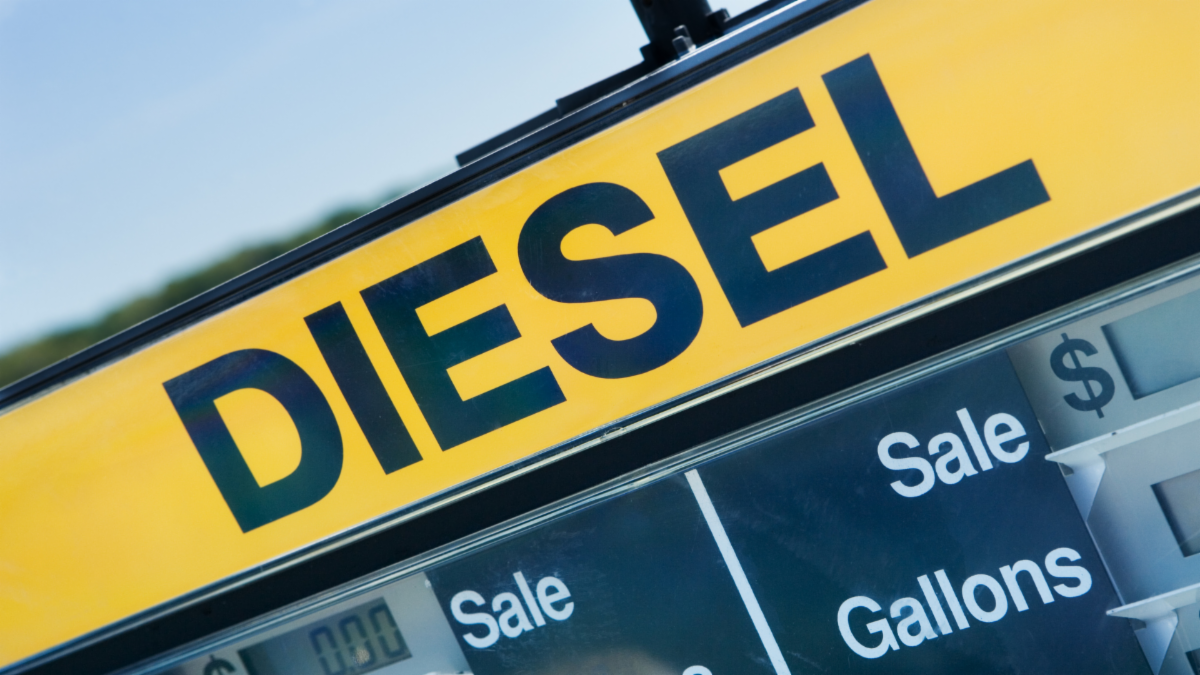
Fuel prices are finally starting to come down, but anyone hoping for a return to the good old days of reasonably priced diesel might want to lower their expectations.
The Energy Information Administration (EIA) just raised its fuel price forecasts for 2027, predicting that gasoline and diesel will remain expensive even as more oil starts flowing out of the Middle East.
Cheaper ain’t cheap enough
In its latest Short-Term Energy Outlook, the EIA increased its projections for 2027, citing ongoing concerns about global fuel supplies.
Here’s what the agency expects:
For some perspective, diesel prices hit a record $6.529 per gallon back in September. So yes, $5 diesel would technically be an improvement, although it’s a little depressing that we’ve reached the point where that’s considered good news.
A lot of this goes back to the U.S.-Iran conflict, which threw global energy markets into chaos earlier this year. Ukrainian drone attacks on Russian refineries haven’t helped either, putting additional pressure on fuel supplies.
There are some encouraging signs, though. Gasoline prices dropped below $4 per gallon on November 9 for the first time since July, and diesel has now fallen for two straight weeks. Traders are also becoming more optimistic about a potential resolution to the Iran conflict.
The problem is that cheaper crude oil doesn’t automatically mean cheaper fuel at the pump. Refining constraints and lingering supply disruptions could keep prices elevated well into next year.
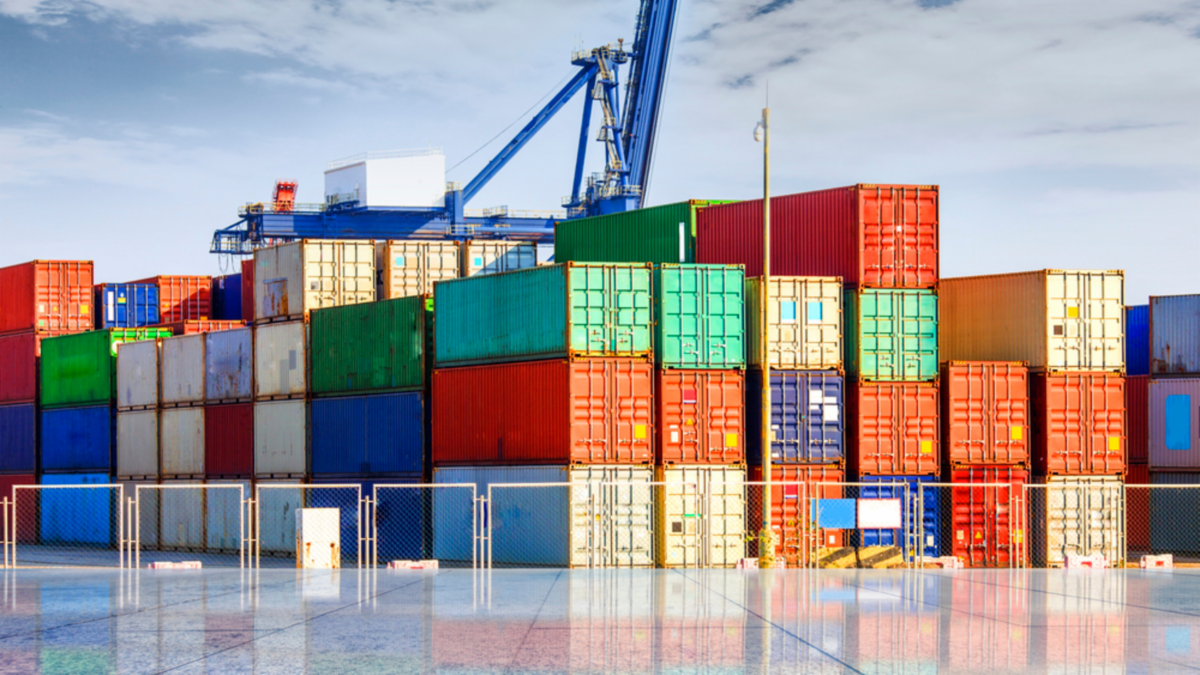
🚢 Global container rates continue to slide: Ocean freight rates declined for the second consecutive week, with Drewry’s World Container Index falling 1% to $4,389 per 40-foot container and the Freightos Baltic Index dropping 2% to $3,452. On the Transpacific, Shanghai-to-Los Angeles rates held steady at $7,539, while Shanghai-to-New York fell 3% to $9,303. Despite the broader slowdown, China’s Containerized Freight Index rose 2.3%, showing that weakness isn’t hitting every trade lane equally. With October’s brief recovery losing steam, carriers are keeping a close eye on capacity and the potential return of more vessels to the Suez Canal.
🚂 U.S. rail traffic climbs as intermodal leads growth: U.S. railroads handled 514,080 carloads and intermodal units during the week ending October 31, up 3.5% year over year, according to the Association of American Railroads (AAR). Intermodal shipments increased 3.9%, while carload traffic rose 3%, led by metallic ores and metals (+18.3%), forest products (+9.3%), and motor vehicles and parts (+9.1%). Grain shipments fell 8.3%, while coal slipped 0.4%. Through the first 43 weeks of 2026, total U.S. rail traffic is up 3.8%, with intermodal continuing to drive much of the growth.
✈️ IAG cargo revenue climbs despite declining traffic: International Airlines Group (IAG) reported approximately $326 million in third-quarter cargo revenue, up 3.9% year over year, even as freight traffic dropped 13.9% to roughly 754 million U.S. ton-miles. Revenue per ton-mile jumped 20.7%, as higher rates and a focus on premium shipments helped offset declining volumes. IAG attributed the slowdown to Middle East disruptions and reduced freighter capacity, particularly on Asia-Pacific routes. Despite the stronger quarter, cargo revenue for the first nine months of 2026 remains 5.3% below last year’s levels.
⛽️ Diesel prices continue to retreat: The national average diesel price fell 16.5 cents to $6.127 per gallon, according to the EIA, marking its second consecutive weekly decline and its lowest level since October 12. Prices have now dropped 40.2 cents from their record high of $6.529, set just seven weeks ago on September 22. While the recent declines offer some relief for carriers, diesel remains historically expensive.
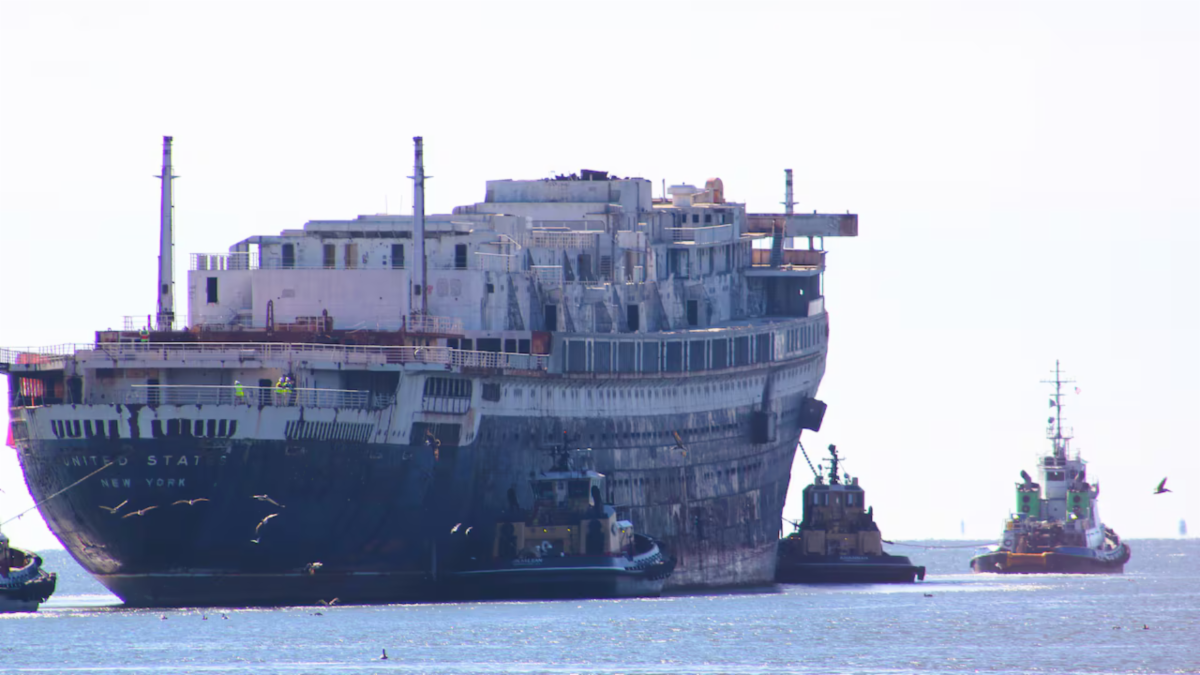
One of America’s most famous ships is heading to the bottom of the ocean, and for once, that’s actually the plan.
The SS United States, a 990-foot ocean liner that once held the record for the fastest transatlantic crossing, is scheduled to be deliberately sunk off the Florida coast today.
The $13.5 million project will turn the historic vessel into the world’s largest artificial reef, giving it a second life as a home for marine life and a destination for wealthy people in a sketchy submersibles scuba divers.
The GOAT of boats
Built in Virginia in 1951, the SS United States was once the crown jewel of American passenger shipping. At 990 feet long, it was actually 108 feet longer than the Titanic, although its operators presumably tried not to bring that comparison up too often.
On its maiden voyage in 1952, the ship crossed the Atlantic in just three days and ten hours, averaging nearly 41 mph and breaking a speed record for ocean liners that still stands today.
It even managed the trip despite encountering winds reaching 69 mph, strong enough to blow a ping pong table off the deck. My dad would be in shambles.
Over its career, the ship completed more than 800 Atlantic crossings and carried some pretty recognizable passengers:
Unfortunately, the rise of commercial air travel made spending several days crossing the Atlantic considerably less appealing. The ship was retired in 1969 and eventually spent decades sitting at a dock in Philadelphia.
Several attempts to turn it into a hotel, museum, or other attraction went nowhere, leaving one of America’s greatest maritime achievements slowly rusting away.
Final destination
Florida’s Okaloosa County purchased the vessel in 2024 with plans to turn it into an artificial reef about 25 miles southwest of Destin. Once submerged, the vessel is expected to rest in approximately 180 feet of water, with its upper deck about 60 feet below the surface.
The project is expected to bring several benefits:
The SS United States will join approximately 500 artificial reefs already located in the surrounding waters, surpassing the 911-foot USS Oriskany, an aircraft carrier sunk off Pensacola in 2006, as the largest.
It’s an unusual ending for a ship that once represented the height of American luxury and engineering. One day you’re carrying Hollywood stars across the Atlantic, and a few decades later you’re being converted into affordable housing for grouper.
Still, it’s a better fate than the scrapyard, and the SS United States gets to break one more record before calling it a career



We’re now posting freight on the Trusted Freight Exchange (TFX), a secure, Highway-powered network made for verified carriers like you.
It’s built right into Highway, free to use, and designed to connect you with quality freight fast.
Every KCH load on TFX is:
With TFX, you skip the back-and-forth and get straight to hauling.

The U.S. has 23 million truck parking spots. You should be able to find one without feeling like you’re on a wild goose chase.
We’re teaming up with Truck Parking Club to make that happen.
Use code KCH25 for $25 off your next reservation.
Less wandering. More rest.
Designed for shippers who want straightforward market insight and smarter freight strategies.