


Good morning, and welcome to The Ship Show!
We’re officially halfway through October, which means Halloween candy has started appearing in grocery stores, offices, and homes across America.
And I think it’s time we had a necessary conversation about the candy hierarchy.
We can disagree about a lot of things, but I think most reasonable people can agree that Reese’s Peanut Butter Cups are the undisputed kings of Halloween candy. Snickers, Twix, and Kit Kats round out the upper class.
If you’re handing these out, you’re running a respectable operation, and the neighborhood appreciates your service.
Then there’s the middle tier: Milky Ways, Hershey’s bars, 3 Musketeers, and Butterfingers. Good candy. Reliable candy. The kind you’ll happily eat once the Reese’s supply has been exhausted.
Things get a little more contentious after that.
Almond Joy has somehow convinced a portion of the population that coconut belongs in chocolate. Tootsie Rolls have been around since 1896, and I’m fairly certain some of the original inventory is still being distributed. And I’m not entirely convinced anyone has ever purchased a box of Milk Duds outside a movie theater.
At the bottom, naturally, is candy corn. An alleged confectionery product that tastes like a candle someone forgot to put a wick in. I know it has its defenders, and I respect their right to be wrong.
But none of these are the real villains of Halloween.
That distinction belongs to the people handing out raisins, toothbrushes, or those individually wrapped strawberry candies that seem to materialize exclusively in grandparents’ houses and bank lobbies.
Halloween is the one night a year when children are encouraged to dress like a minion, approach strangers’ houses, and demand sugar.
Let’s not suddenly get responsible about the snacks.
– Greyson Harris
In this week’s issue:


Diesel prices are soaring, the midterm elections are approaching, and President Donald Trump has a plan to bring some relief to American truckers and consumers.
That plan involves buying diesel from Vladimir Putin, which, unsurprisingly, has raised a few eyebrows.
On Friday, October 9, Trump announced an agreement with the Russian president to release millions of tons of diesel into U.S. and global markets over the coming months.
According to Trump, the additional supply means prices will be “COMING DOWN, IN RECORD NUMBERS, AND FAST!”
Energy analysts are considerably less enthusiastic despite the capital letters.
The announcement comes as diesel prices continue to hammer the transportation industry.
According to AAA, the national average reached approximately $6.28 per gallon on Tuesday, up from roughly $3.76 before the Iran war began on February 28. That’s an increase of about 67% in less than eight months.
Prices actually peaked at a record $6.53 on September 22, putting enormous pressure on truckers, farmers, manufacturers, and pretty much anyone who prefers their groceries arrive by something other than horseback.
Much of the increase stems from the ongoing war with Iran, which has disrupted oil shipments through the Strait of Hormuz and reduced refining capacity throughout the Middle East.
But Trump has also pointed to Ukraine’s repeated attacks on Russian oil refineries as a major contributor.
Those attacks have been remarkably effective. Ukraine has spent years targeting critical refinery equipment that’s difficult and expensive to replace, forcing Russia to restrict diesel exports in July to protect its own domestic supply.
Which brings us to the rather obvious question of how Russia intends to solve America’s diesel shortage while dealing with one of its own.
Under the agreement, Russia has committed to releasing approximately 4.8 million metric tons of diesel in several stages:
The Treasury Department also issued a temporary sanctions waiver allowing transactions involving Russian diesel through April 2027, reversing restrictions imposed following Russia’s invasion of Ukraine.
But there’s a catch.
According to Reuters, the initial 300,000-ton commitment amounts to approximately 2.25 million barrels, less than a single day’s diesel consumption by the U.S. transportation sector.
Even the entire promised supply would represent a relatively small contribution to global demand, especially since deliveries would be spread across several months.
There’s also no guarantee Russia can fulfill those commitments. Ukrainian attacks have damaged its refineries, sanctions have complicated tanker availability, and much of the fuel Russia could export might simply be redirected from existing customers.
In other words, adding Russian diesel to the market doesn’t necessarily mean adding much new diesel to the market.
The agreement has also created an unusually bipartisan headache in Washington.
On Tuesday, 12 senators from both parties urged Trump to rescind the deal, arguing that allowing Russian fuel sales would undermine American sanctions and provide Moscow with additional revenue to finance its war.
Republican Sen. Thom Tillis has questioned whether the agreement is even legal, while Treasury Secretary Scott Bessent insists the administration has the authority to proceed.
Ukrainian President Volodymyr Zelensky was equally critical, warning that the agreement would embolden Russia and prolong the fighting.
Trump responded Saturday by suggesting Ukraine should replace Zelensky, telling reporters, “I think it’s time for Ukraine to get a new president.”
Then, on Sunday, Trump announced that Russia and Ukraine had agreed to an immediate ceasefire involving attacks on energy infrastructure.
There was just one complication: Zelensky hadn’t heard anything about an agreement, and Moscow hadn’t confirmed one.
Despite Trump’s promise of rapid relief, energy experts remain skeptical that the agreement will meaningfully reduce fuel costs.
The underlying problem extends far beyond Russia. Middle Eastern supply disruptions, refinery damage, low inventories, and persistent global demand are all keeping diesel prices elevated.
And while additional Russian supplies could provide some marginal relief, analysts say they are unlikely to reverse the broader market imbalance.
For American carriers, that means fuel surcharges, higher operating expenses, and continued pressure on freight transportation costs aren’t going away anytime soon.
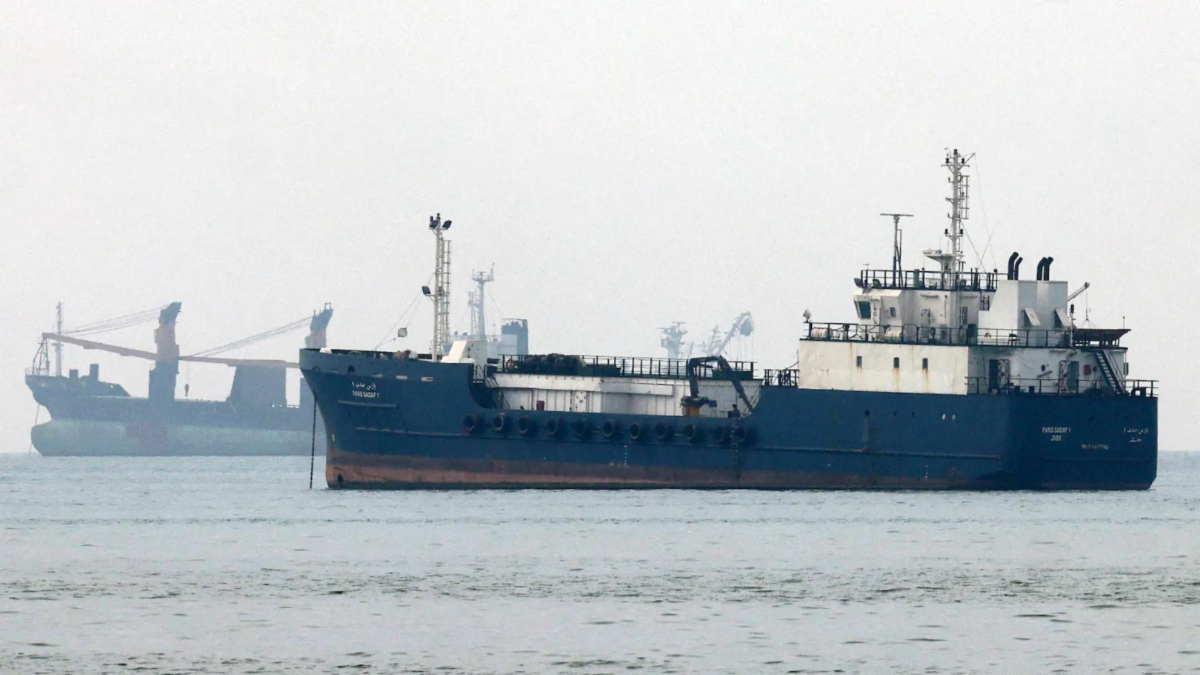
The shipping industry’s latest workaround for getting oil through the Strait of Hormuz appears to have one rather significant flaw.
Iran knows about it.
After months of missile strikes, maritime disruptions, and increasingly expensive attempts to keep oil flowing out of the Persian Gulf, Iranian forces appear to be targeting the very vessels helping energy companies navigate the crisis.
According to the Institute for the Study of War, Iran is increasingly threatening commercial ships involved in oil transfers near the strait, potentially undermining a U.S.-backed operation designed to keep crude moving to global markets.
The warning comes after another round of attacks over the weekend, when at least three vessels were struck by unidentified projectiles.
Nobody immediately claimed responsibility, although Iranian officials haven’t exactly been subtle about their intentions.
Under normal circumstances, the Strait of Hormuz handles roughly one-fifth of the world’s oil and petroleum liquids consumption.
Unfortunately, circumstances haven’t been normal since February.
Iranian attacks have made the narrow waterway increasingly dangerous for commercial vessels, forcing shipping companies to reconsider how they move millions of barrels of oil out of the region.
One solution has been an American-backed operation involving smaller tankers carrying oil through the strait before transferring their cargo to much larger vessels waiting in the Gulf of Oman.
These ship-to-ship transfers allow larger tankers to avoid entering the most dangerous sections of the waterway while keeping oil exports moving. Some participating vessels reportedly travel at night or disable their tracking signals to reduce the risk of being targeted.
It’s an elaborate process involving military coordination, multiple ships, and considerably more moving parts than simply loading a tanker and sending it on its way.
And Iran appears determined to make it even more complicated.
On October 10, senior Iranian security official Mohsen Rezaei claimed the country’s forces were attacking an average of five “smuggling ships” every night.
Those figures haven’t been independently verified, but Rezaei appeared to be referring directly to vessels participating in the U.S.-backed transfer operation.
Iranian officials have also threatened to shut down shipping routes they consider unauthorized, particularly those operating near Oman’s coastline.
The latest escalation follows a particularly violent stretch for commercial shipping.
According to the Financial Times, 24 vessels were attacked in the two weeks ending October 11, making it the most intense period of maritime attacks since the early weeks of the war.
Six vessels were reportedly targeted on October 11 alone, including crude oil tankers, refined-product carriers, and a container ship.
The United Kingdom Maritime Trade Operations Centre subsequently reported additional incidents involving three vessels on October 12:
Authorities are investigating the incidents, and responsibility for the attacks has not been confirmed.
Meanwhile, analysts believe Iran may be improving its anti-ship missile capabilities, potentially making future attacks more effective.
That’s unwelcome news for an industry that would presumably prefer fewer missiles in its operating environment, regardless of their accuracy.
Iran isn’t the only regional threat causing problems for the energy industry.
On Monday, Yemen’s Iran-backed Houthi rebels warned international airlines that Saudi airports were unsafe, with exceptions for airports serving the holy cities of Mecca and Medina.
The group also declared facilities operated by Saudi oil giant Aramco legitimate military targets and urged workers and civilians to avoid them.
The threats followed renewed fighting between the Houthis and Saudi-backed forces in Yemen, including a deadly October 10 missile attack on Riyadh’s international airport.
Then, on Tuesday, a missile strike damaged an administrative building at Aramco’s headquarters in Dhahran, sparking a fire but causing no reported injuries.
The Houthis have since promised additional attacks on Saudi airports and energy infrastructure.
Beyond the immediate threat to Saudi Arabia, the renewed fighting raises concerns about shipping near the Bab el-Mandeb Strait, the narrow passage connecting the Red Sea to the Gulf of Aden.
With the Strait of Hormuz under pressure to the east and renewed threats near the Red Sea to the west, shipping companies are running short on uncomplicated options.
The consequences are already showing up in global energy markets.
Oil exports through the Strait of Hormuz fell to approximately 2.9 million barrels per day on October 11, compared with a September peak of 15.5 million barrels per day.
The growing danger has also pushed tanker costs dramatically higher. On October 9, daily earnings for some supertankers reportedly reached a record $805,000 as vessels became increasingly expensive to secure.
Higher shipping costs, disrupted oil supplies, and longer routes ultimately ripple through the broader transportation industry, particularly as American trucking companies continue dealing with historically elevated diesel prices.
And while the ship-to-ship transfer strategy initially helped restore oil movements through the region, Iran’s apparent shift in targeting threatens to undo that progress.
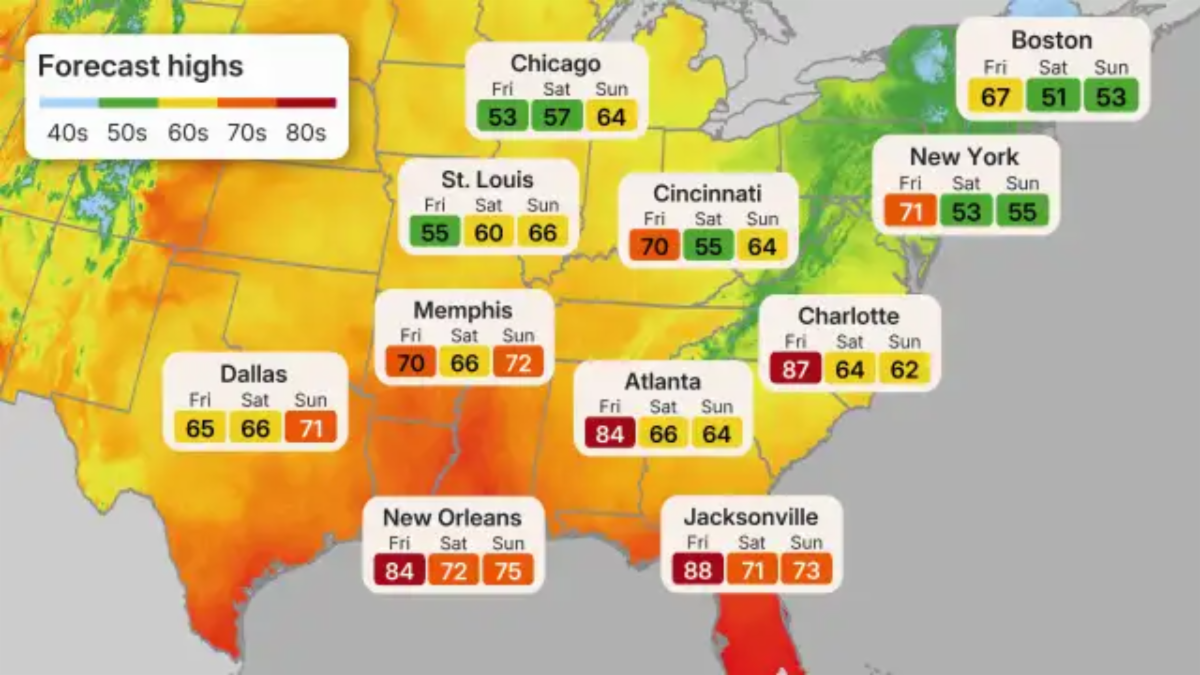
❄️ Cold front brings a taste of
🚂 U.S. rail traffic climbs 5.1%:
🚢 Port of Los Angeles sets
✈️ Airfreight rates dip ahead of
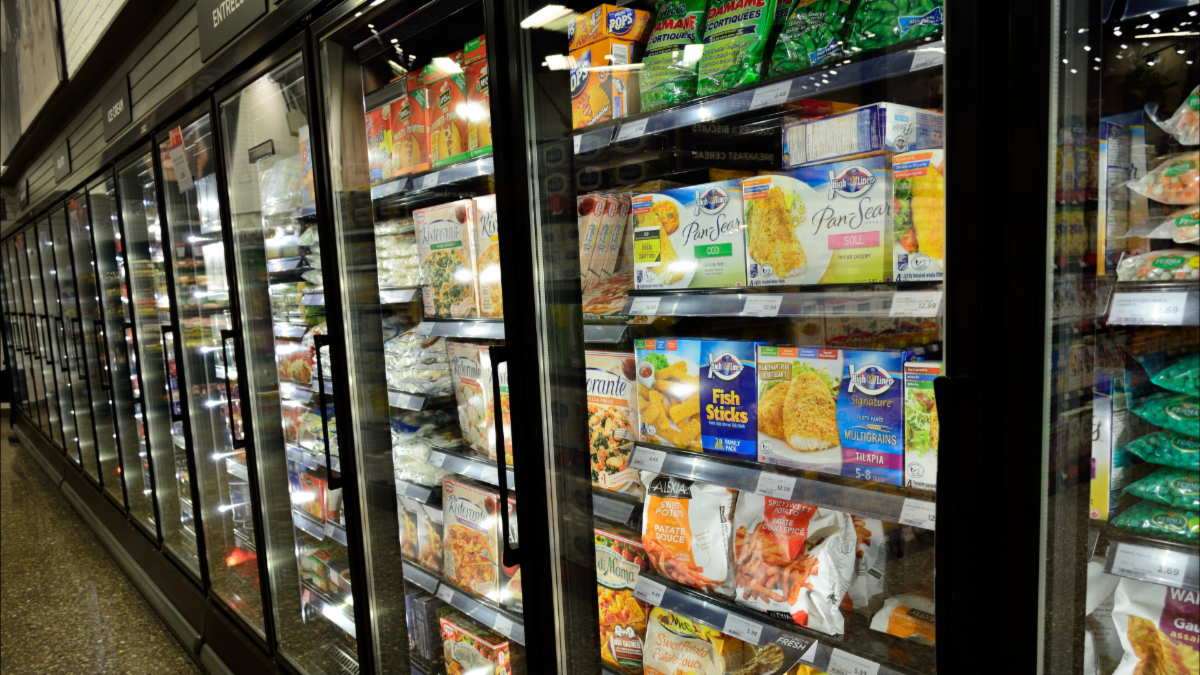
Most grocery stores have a fairly straightforward expectation for their freezers: keep the food frozen.
Apparently that’s easier said than done.
Hundreds of French supermarkets were hit by a massive cyberattack Sunday night after hackers remotely hijacked refrigeration systems and cranked temperatures as high as 122°F, spoiling food, damaging equipment, and even starting fires.
For context, 122°F is hotter than Death Valley’s average July high. Not ideal conditions for storing raw chicken.
The attack affected approximately 700 stores across several major grocery chains (none of which I can pronounce), prompting French Prime Minister Sébastien Lecornu to order a national cybersecurity investigation.
Runaway defrost
The hackers reportedly exploited internet-connected refrigeration controls, manipulating the systems that periodically warm equipment to prevent ice buildup.
Normally, these automatic defrost cycles last about an hour before the equipment returns to its regularly scheduled refrigeration duties.
The attackers allegedly extended those cycles to as long as eight hours, allowing temperatures to climb while delaying warning alarms.
At one Intermarché location, a delivery driver arrived early Monday morning to discover the storeroom flooded after the heat triggered the building’s sprinkler system.
Another store reported temperatures reaching 176°F (80°C), hot enough to damage and melt equipment.
Across the country, employees were forced to throw away large quantities of meat, dairy, frozen foods, and other perishables. One store alone reported losing approximately €21,000 (around $23,000 American freedom bucks) in inventory, with nationwide losses potentially reaching tens of millions.
This was bound to happen eventually
Perhaps the most concerning part of the attack is that the underlying security weaknesses weren’t exactly a surprise.
France’s cybersecurity agency identified compromised refrigeration controllers associated with Danish manufacturer Danfoss, along with equipment from Copeland and its subsidiary Dixell.
These systems allow supermarkets, warehouses, and other facilities to monitor and adjust refrigeration equipment remotely.
It’s convenient for maintenance teams managing hundreds of refrigerated units, but it also creates an opportunity for someone who has no business adjusting the temperature.
And some of those opportunities had been sitting there for months.
In August, cybersecurity researchers at Claroty identified serious vulnerabilities in refrigeration-control systems that could allow unauthorized users to bypass security protections and manipulate equipment remotely.
The manufacturers issued fixes, but many affected stores were still operating outdated software or equipment that no longer received security updates.
The exact method used in this attack has not been publicly confirmed, although investigators and cybersecurity experts are examining those known vulnerabilities.
Reuters also discovered at least 4,500 Danfoss control interfaces publicly visible on the internet as of Tuesday. Not all were confirmed vulnerable, but cybersecurity researchers found that outdated software remained widespread.
For perspective, that’s thousands of commercial refrigeration systems potentially accessible from outside their facilities.
Someone should probably look into that.

I’ve been actively avoiding this story for several days now.
Every time it appeared in my news feed, I scrolled past it, confident that a celebrity arguing with a novelty shop over a mechanical bird wasn’t something we needed to discuss.
But the controversy has now attracted tens of millions of views, and I’ve reached the point where ignoring it would arguably be more irresponsible than writing about it.
So, against my better judgment, let’s talk about Kelly Clarkson and her $15,000 bird.
For the birds
Over the weekend, Clarkson visited Art of Play, a boutique specializing in puzzles, games, and unusual collectibles, where she became interested in a singing and dancing mechanical bird named Molly.
According to Clarkson, an employee treated her condescendingly, suggesting she couldn’t afford the $15,000 bird and offering to show her something cheaper.
Clarkson took to social media, comparing the experience to that scene in Pretty Woman where Julia Roberts gets dismissed by snooty salespeople.
The store, however, tells a different story.
Art of Play responded that Molly wasn’t actually for sale because she was a permanent part of the store’s magic shows. Employees had simply offered Clarkson a different mechanical bird for $2,000.
Clarkson then posted a photograph of the $15,000 price tag and accused the store of lying.
The shop clarified that Molly’s nearly identical twin was available for purchase, but the original bird was staying put.
I regret to inform you that this distinction is central to the controversy.
The bird is the word
Naturally, the internet is fighting over this inanimate object and Clarkson’s very animated response.
Clarkson’s posts attracted millions of views, the store was flooded with negative reviews, and complete strangers began passionately defending their preferred side of a dispute involving two nearly identical mechanical birds.
The shop has since reached out to Clarkson in hopes of resolving the situation. Who says complaining gets you nowhere?
I’ve now spent more time researching this than I care to admit, and I regret to inform you that I still don’t know why any of us are involved.



We’re now posting freight on the Trusted Freight Exchange (TFX), a secure, Highway-powered network made for verified carriers like you.
It’s built right into Highway, free to use, and designed to connect you with quality freight fast.
Every KCH load on TFX is:
With TFX, you skip the back-and-forth and get straight to hauling.

The U.S. has 23 million truck parking spots. You should be able to find one without feeling like you’re on a wild goose chase.
We’re teaming up with Truck Parking Club to make that happen.
Use code KCH25 for $25 off your next reservation.
Less wandering. More rest.
Designed for shippers who want straightforward market insight and smarter freight strategies.